





Laparoscopy
Struggling with sharp pain, bloating, or pelvic pressure? This minimally invasive surgery can help uncover the cause—and start you on the path to relief.
What is a Laparoscopy Procedure?
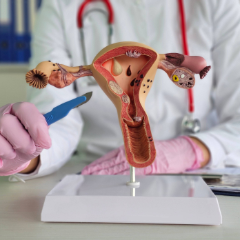
When conditions like endometriosis, fibroids, ovarian cysts, or unexplained pelvic pain are suspected and need treatment, your provider may schedule you for a diagnostic laparoscopy. This minimally invasive procedure allows your doctor to see inside your pelvis using a small camera and just a few tiny incisions. Recovery from a laparoscopy is mild, with most people returning home the same day and recovering within a week, making it a safe, effective way to get answers and feel better, faster.
You may be recommended for a laparoscopy procedure if:- You’re experiencing chronic pelvic pain or unexplained abdominal symptoms
- Your provider suspects endometriosis, fibroids, or ovarian cysts
- You’re having trouble conceiving and need further fertility evaluation
- Imaging tests revealed growths or abnormalities that need closer examination
- A previous diagnosis requires surgical treatment or confirmation
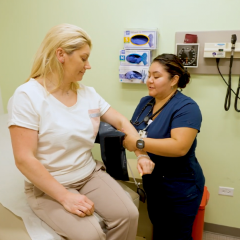
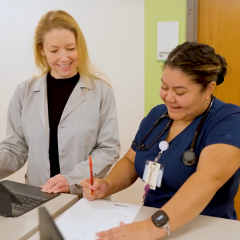
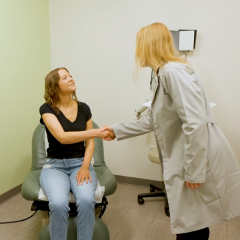
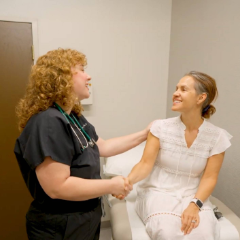
Your care team will walk you through the entire process, answer your questions, and provide instructions for fasting or adjusting medications. Most laparoscopies are done under general anesthesia, so you’ll also have a pre-op screening to ensure everything is safe and personalized to your needs.
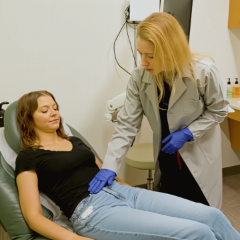
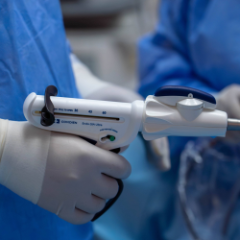
Once you’re comfortably asleep, your surgeon will make a few small incisions—typically near your belly button—to insert a tiny camera and surgical tools. The entire procedure usually takes 30 to 90 minutes, depending on the complexity and whether treatment is performed alongside diagnosis.
You’ll rest in recovery briefly while the anesthesia wears off. Most patients go home the same day with post-op instructions and follow-up care already scheduled. Some mild bloating, cramping, or shoulder soreness is common, but these symptoms usually improve within a few days. You should be back to most normal activities within a week, often sooner.
What to Expect During a Laparoscopy Procedure
Insurance Information
Most insurance plans typically cover a gynecologic laparoscopy when deemed medically necessary, such as for diagnosing or treating pain, cysts, or other pelvic conditions. Our team can help verify your coverage in advance and walk you through any out-of-pocket costs, so there are no surprises.
Patient Resources
From accessing the patient portal to downloading forms, reviewing insurance details, and exploring helpful FAQs and educational guides – we make it easy to stay informed, prepared, and confident in your care.
Meet Our Gynecologists
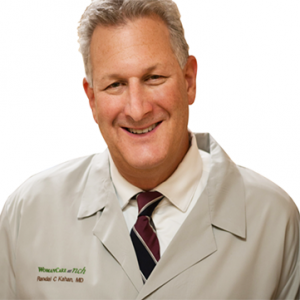
Randall C. Kahan, MD
Meet Dr. Randall C. Kahan of WomanCare, serving Cook & Lake County, IL. Providing trusted gynecology, obstetrics, and compassionate women’s health services.
Erin Kopeny, PA-C
Leta M. Vega, DNP, APN, CNM
Gina Marcin, CNM, LAc, RH (AHG)
Alisha M. Wesley, APRN, CNM
Jenny Mathew, WNHP-BC
Claire Bareiss, PA-C
Madison Monk, PA-C, MS
Carter S. Black, RPh
Find a Gynecologist Near You
Choose from five trusted locations across Chicago’s northwest suburbs and get care close to home.
Arlington Heights (Central Rd)
1614 W. Central Rd, Suite 205, Arlington Heights, IL 60005
Arlington Heights (Rand Rd)
1051 W Rand Rd, Suite 101, Arlington Heights, IL 60004
Buffalo Grove
Kildeer
Schaumburg
Ready for Answers? Take the Next Step Towards Clarity and Relief
It’s a minimally invasive procedure that lets your doctor see your pelvic organs using a small camera and tiny incisions.
Laparoscopy is often used to diagnose or treat endometriosis, ovarian cysts, fibroids, unexplained pelvic pain, or infertility concerns.
No. It’s a minimally invasive outpatient procedure, which means most people go home the same day.
Yes. Laparoscopy is typically done under general anesthesia, so you’ll be asleep and won’t feel any pain during the surgery.
Most laparoscopies take 30 to 90 minutes, depending on what’s being evaluated or treated.
You may have mild cramping, bloating, or shoulder soreness for a few days. Most patients are back to normal activities within a week.
As with any surgery, there are small risks like infection or bleeding, but complications are rare, especially in experienced hands.
If your laparoscopy was diagnostic, your provider will usually discuss findings within a few days, sometimes even before you leave recovery.
In many cases, laparoscopy can improve fertility by identifying or treating issues like endometriosis or blocked fallopian tubes.
Typically, yes—if it’s medically necessary. Our team can help check your coverage and explain any out-of-pocket costs.