



























What is an Obstetric Ultrasound?

  • An OB ultrasound is a safe and painless procedure to produce images of a developing embryo or fetus, as well as the mother’s uterus and ovaries. To perform an OB ultrasound, your sonographer will apply a warm, water-based gel to your abdomen and gently move a transducer around your belly. The transducer emits high-frequency, inaudible sound waves to capture images. This imaging procedure does not involve the use of radiation, and studies have shown no risk to the mother or fetus. 

    Your provider may request an OB ultrasound to:
     
  • Confirm the presence of an embryo or fetus
  • Estimate the age of the fetus and the due date
  • Evaluate the position of the fetus and placenta
  • Examine the amount of amniotic fluid around the fetus
  • Monitor fetal development and viability 
  • Check for any congenital abnormalities 

You don’t need to do much to get ready. We recommend wearing a loose-fitting, two-piece outfit so your lower abdomen is easy to expose. To keep the area accessible, please also skip any jewelry or lotions around your belly. 

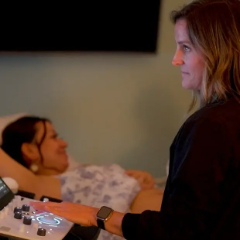
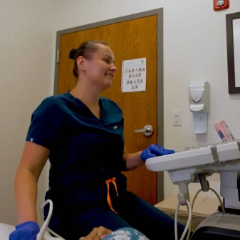
soundDuring the procedure, you’ll lie on an exam table, which the sonographer may tilt or adjust for better visibility. A water-based gel will be applied to your lower abdomen to help the transducer move smoothly across your skin. The sonographer will gently guide the transducer back and forth to capture clear images of your baby and uterus. The procedure is completely safe and painless–you may feel light pressure, but most women find it very comfortable. 

Once your imaging is complete, we’ll gently wipe away the gel and review any early findings with you. You’ll also have the option to take home printed or digital photos from your scan. No recovery time is needed, so you can return to your day-to-day activities immediately.

Your OB Ultrasound Procedure: What to Expect

Whether it’s your first ultrasound or your third, understanding the process can help ease your mind. Your pregnancy journey will include three key ultrasounds, each scheduled by your provider to track important milestones: Week 1: At your first obstetrical visit, your provider will schedule an initial ultrasound to evaluate your due date, placenta location, and the viability of the fetus. Weeks 20-22: Your provider will schedule a second ultrasound to examine the baby's growth and anatomy. Weeks 30-32: Your provider will schedule a third ultrasound to continue monitoring the baby's growth and position.
Mask group (6)

Insurance Information

Most health insurance plans will cover some or all OB ultrasounds when medically necessary. Our team is here to help you confirm your coverage and identify any out-of-pocket costs upfront, so there are no surprises.

Mask group (7)

Patient Resources

From accessing the patient portal to downloading forms, reviewing insurance details, and exploring helpful FAQs and educational guides – we make it easy to stay informed, prepared, and confident in your care.

Find a Gynecologist Near You

Choose from five trusted locations across Chicago’s northwest suburbs and get care close to home.

Arlington Heights (Central Rd)

1614 W. Central Rd, Suite 205, Arlington Heights, IL 60005

Arlington Heights (Rand Rd)

Buffalo Grove

Kildeer

Schaumburg

Every First Moment Matters. See It With Expert Eyes.

An OB ultrasound is a safe and painless imaging method that uses sound waves to create images of your baby during pregnancy. It helps confirm your due date, track your baby’s growth and anatomy, and screen for potential complications.

Most patients have three routine ultrasounds—early pregnancy, around 20 weeks, and again between 30–32 weeks—to check development, anatomy, and positioning. 

There’s no special preparation needed, but wearing a loose-fitting, two-piece outfit can make things easier. You’ll only need to expose your lower abdomen, and it’s best to skip jewelry that may get in the way. 

An OB ultrasound can take 20 minutes to 1 hour, depending on your stage of pregnancy and what needs to be evaluated. Your care team will let you know what to expect before your scan. 

Your provider will often review images in real-time and share key findings with you, though some results may be finalized after further review.

Yes, if you choose to, your baby’s sex can often be seen during the mid-pregnancy (Week 20-22) ultrasound. 

Absolutely! Patients can receive printed images or digital access to share with family or keep for personal milestones.

If anything concerning appears, your provider will walk you through next steps, which may include a follow-up scan or a referral to a specialist.

Frequently Asked Questions